
Professional Liability Insurance in Germany: Berufshaftpflicht vs Betriebshaftpflicht Explained
Berufshaftpflicht (professional indemnity) vs Betriebshaftpflicht (public/business liability) in Germany: what each German policy covers, which is mandatory, and which you actually need as a freelancer.
By Paul Bendzik · Independent insurance broker

The essentials at a glance
Berufshaftpflicht (professional indemnity) and Betriebshaftpflicht (public/business liability) sound alike but cover different risks. Betriebshaftpflicht pays for third-party personal injury and property damage your business causes. Berufshaftpflicht covers mistakes in your professional work, including their financial consequences. Pure financial loss with no injury or property damage attached is a job for Vermögensschadenhaftpflicht. Your private liability policy never pays for work-related claims. This comparison shows what each policy covers, which is a legal requirement, and which one you actually need as a freelancer in Germany.
At a glance
Berufshaftpflicht and Betriebshaftpflicht are the two mix-ups I hear most often in advice sessions at DigiCare Insurance. The names sound almost identical, but the policies protect against completely different kinds of damage. Get the wrong one and you can be left carrying serious costs yourself. This guide separates the two step by step, and maps them onto the English terms "professional indemnity" and "public liability" that most expats already know.
Berufshaftpflicht vs Betriebshaftpflicht: the difference in one minute
Betriebshaftpflicht (the closest German equivalent to "public liability") pays for third-party personal injury and property damage that your business causes, such as a customer who slips in your shop. Berufshaftpflicht (professional indemnity) covers mistakes in your professional work and, depending on scope, their financial consequences too. In short: Betrieb protects against damage from running the business, Beruf against mistakes in the professional service itself.
The two policies also differ in reach. Betriebshaftpflicht additionally covers *unechte Vermögensschäden* — financial consequences that follow directly from a personal-injury or property-damage claim. Berufshaftpflicht is broader: depending on the policy, it can cover personal injury, property damage and financial loss, as long as all three result from a professional mistake. Both rest on the same legal basis, the duty to compensate under § 823 German Civil Code (BGB).
One note on wording that matters: some insurers use "Berufshaftpflicht" narrowly to mean only *pure* financial-loss cover — what Germans call Vermögensschadenhaftpflicht. DigiCare uses the broad definition. Always check the actual scope of cover, not just the policy's name; the German Insurance Association (GDV) publishes background on the distinction. For the full picture, see our overview of professional liability insurance in Germany. We cover pure financial loss and private liability further down.
What is Betriebshaftpflichtversicherung (business / public liability)?
Betriebshaftpflichtversicherung pays out when your business, your staff, your premises or your products cause a third party a loss. It covers personal injury, property damage and the financial disadvantages that follow from either. Damage to your own company property isn't covered, only damage to third parties.
Three typical examples make the cover concrete
- 1Personal injury A customer trips over a cable in your shop and breaks an arm.
- 2Property damage An employee damages expensive furniture during a client visit.
- 3Consequential financial loss (unechter Vermögensschaden) The customer's damaged business has to close temporarily, causing lost income as a direct result of the property damage.
Cover typically includes
- 1Personal injury to customers, visitors and passers-by
- 2Property damage to third-party belongings
- 3Damage to rented commercial premises, such as damaged floors or walls
- 4Damage from defective products under the Product Liability Act (ProdHaftG)
- 5Consequential financial loss following personal injury or property damage
This policy is aimed mainly at businesses with customer contact: trades, hospitality, retail and service providers with their own premises. The legal basis is again statutory liability under § 823 BGB. Betriebshaftpflicht does not cover damage to your own company property — for that you need a separate contents policy.
What is Berufshaftpflichtversicherung, the broad definition of professional indemnity?
Berufshaftpflichtversicherung covers damage caused by mistakes in your professional work. Depending on your activity and the policy's scope, it can protect against personal injury, property damage and financial loss. It applies when the damage is caused not by the business as such, but by your professional service itself.
The market doesn't use the term consistently. Some providers treat Berufshaftpflicht as an umbrella term for every professional liability risk. Others equate it with pure financial-loss cover only. Read exactly which types of damage a policy names before you sign — the GDV publishes helpful background.
A second advantage is passive legal protection (*passiver Rechtsschutz*). When a client files a claim, the insurer first checks whether it's justified. It fights unjustified claims at its own expense, in court if necessary — you don't carry the litigation risk alone.
Typical mistakes that lead to a claim include
- 1Advice errors with financial consequences for the client
- 2Calculation errors in a costing or a plan
- 3Instruction errors when handing over a finished piece of work
- 4Infringing copyright in creative professions
The Federal Financial Supervisory Authority (BaFin) supervises the insurance companies that underwrite these policies, not the insurance brokers who arrange them. We cover pure financial-loss liability separately in the next section.
Vermögensschadenhaftpflicht: the third pillar for advisory professions
Alongside business and professional liability, there's a third pillar. Vermögensschadenhaftpflicht closes a gap many people overlook: pure financial loss with no personal injury or property damage attached.
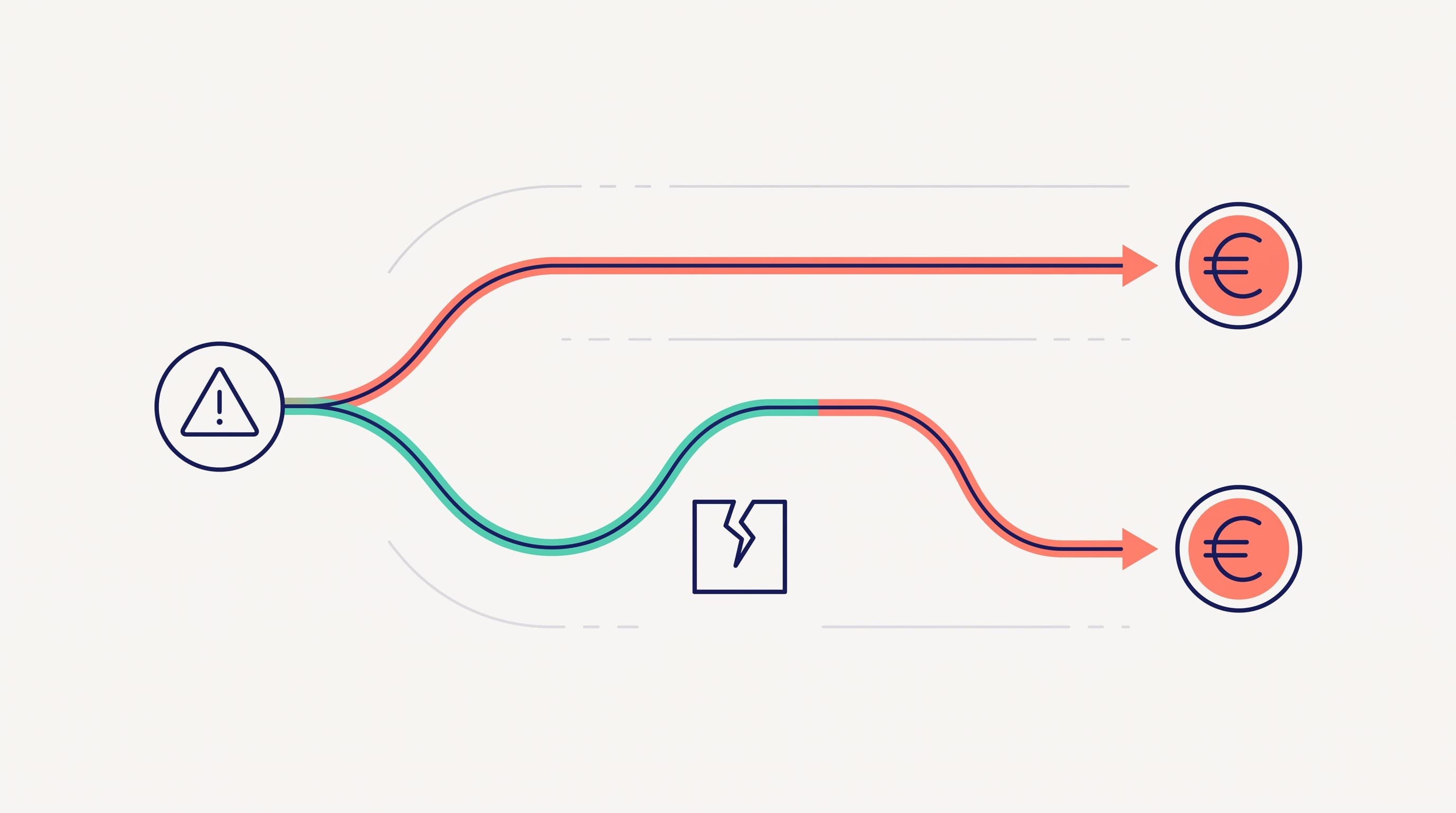
The distinction comes down to two terms. A genuine financial loss (*echter Vermögensschaden*) is a purely monetary disadvantage with no personal injury or property damage before it. Two real-world examples: a tax advisor makes a mistake and the client has to pay back taxes; a coding error causes data loss and lost revenue for a client. A consequential financial loss (*unechter Vermögensschaden*), also called a Vermögensfolgeschaden, is the financial result of a personal injury or property damage claim — Betriebshaftpflicht already covers that one.
Betriebshaftpflicht generally does not pay genuine financial losses. That's exactly the gap Vermögensschadenhaftpflicht closes. It matters most for advisory and auditing professions — lawyers, tax advisors, auditors, notaries and insurance brokers — where it's often a statutory requirement, for example under § 34d Trade Regulation Act (GewO) and the Insurance Mediation Ordinance (VersVermV). If you work in an advisory role, make sure you specifically cover pure financial loss.
Business, professional and private liability compared side by side
The table below sets four policies side by side, mapped to the English terms most expats already know, so you can see at a glance which insurance carries which type of damage.
| Feature | Private liability (Privathaftpflicht) | Business / public liability (Betriebshaftpflicht) | Professional indemnity (Berufshaftpflicht) | Pure financial-loss liability (Vermögensschadenhaftpflicht) |
|---|---|---|---|---|
| What's covered | Damage in private life | Personal injury/property damage caused by the business | Mistakes in professional work | Pure financial loss |
| Who it's for | Private individuals | Businesses with customer contact | Advisory, planning and creative professions | Lawyers, tax advisors, auditors, notaries, brokers |
| Personal injury | Yes (private) | Yes | Yes | No |
| Property damage | Yes (private) | Yes | Yes | No |
| Genuine financial loss | No | No | Sometimes | Yes |
| Consequential financial loss | Yes (private) | Yes | Yes | Yes |
| Private or professional | Private only | Professional only | Professional only | Professional only |
| Statutory requirement | No | Usually no | Sometimes | Yes, for many professions |
What this means if you're self-employed
Private liability insurance never pays for professional damage. That's the most common misunderstanding among the self-employed, and I see it week after week. As soon as damage arises from your professional activity, the private insurer declines the claim. For your professional life you always need a separate business or professional policy. The Verbraucherzentrale and the GDV publish further guidance on the distinction.
Which insurance do I need? Deciding by activity and legal form
Which policy is right for you depends on what you actually do, not on the name of the insurance. As a rule of thumb: if you work with customers and premises, you need Betriebshaftpflicht. If you advise or plan, you need Berufshaftpflicht. If you carry purely financial risk, you need Vermögensschadenhaftpflicht.
The following if-then list helps you place yourself
- 1Customer contact, business premises or trades work Betriebshaftpflicht.
- 2Advisory, auditing or creative work Berufshaftpflicht in its broad form.
- 3Purely advisory with a high financial-error risk (lawyer, tax advisor, auditor) Vermögensschadenhaftpflicht.
- 4Mixed activity, such as a tradesperson who also does energy consulting A combination of both policies.
- 5IT and media service providers The risk sits between property damage (a damaged client server) and genuine financial loss (a coding error costs revenue). A combined policy, often marketed as IT liability insurance, fits best here.
One point that surprises many expats: your legal form doesn't change the type of cover you need. Sole traders, GbR partnerships and small businesses (Kleingewerbe) need the same Betriebshaftpflicht as a GmbH. Legal form only affects the premium basis — revenue and headcount. Germany's Federal Statistical Office (Destatis) tracks the number of self-employed people in the country. Freelancers can find more detail in our guide to professional indemnity insurance for freelancers.
When is professional indemnity insurance a legal requirement?
For most professions, Berufshaftpflicht isn't a legal requirement — it's an urgent recommendation. For regulated professions, though, the legislator sets a statutory minimum sum insured. The table below lists the most important cases.
| Profession | Legal basis | Statutory minimum sum insured |
|---|---|---|
| Lawyer | § 51 BRAO | €250,000 |
| Notary | § 19a BNotO | €500,000 |
| Auditor | § 54 WPO | €1,000,000 |
| Tax advisor | § 52 DVStB | €250,000 |
| Panel doctor (Vertragsarzt) | § 95e SGB V | €3,000,000 |
Why this matters
Most businesses have no general legal duty to hold Betriebshaftpflicht. Proof only becomes necessary once a lease or a public tender demands it. The statutory requirement mainly targets regulated professions. Architects and engineers are governed by state and chamber law, not by a single nationwide duty.
Read more in our dedicated guide on when professional indemnity insurance is mandatory. For doctors, we've explained the rules on professional indemnity insurance for doctors (€3 million) in detail.
What does business or professional liability insurance cost in Germany?
The premium always depends on the individual case. It's based on industry, revenue, sum insured and deductible. There's no fixed price, but there are typical price bands from market observation.
As a rough guide (net premiums, each plus 19% insurance premium tax)
- 1Small service providers and freelancers typically pay from around €5 to €30 a month for Berufshaftpflicht.
- 2Betriebshaftpflicht typically costs around €200 to €730 a year, depending on revenue and cover.
The premium rises or falls with several factors
- 1Industry and the risk level of the activity
- 2Annual revenue and headcount
- 3The sum insured you choose
- 4The size of your deductible
As a sum insured, €3 to €5 million for personal injury and property damage plus €1 million for financial loss is a sensible benchmark. I use these figures in almost every advice session, unless the industry carries a higher risk. The GDV and our guide on what professional indemnity insurance costs explain the price factors in more detail. DigiCare is an independent insurance broker (Versicherungsmakler) under §34d Trade Regulation Act (GewO) and compares offers on your behalf. The initial consultation, including the statutory pre-contract information, is free.
The bottom line
Betriebshaftpflicht, Berufshaftpflicht and Vermögensschadenhaftpflicht cover three different risks. Betriebshaftpflicht protects against personal injury and property damage to customers. Berufshaftpflicht carries the cost of mistakes in your professional service. Vermögensschadenhaftpflicht closes the gap for pure financial loss. Your private liability policy never pays for professional damage.
Which combination is right for you depends on what you actually do. An independent insurance broker reviews your specific risk and finds the right cover. DigiCare advises you for free and independently of any single insurer. For a full overview of every building block, see our page on professional liability insurance in Germany.
Frequently asked questions
Are professional and business liability insurance the same thing?
No. They serve different purposes. Betriebshaftpflicht (business/public liability) covers personal injury and property damage your business causes third parties. Berufshaftpflicht (professional indemnity) covers mistakes in your professional work, including their financial consequences.
When doesn't business liability insurance pay out?
Cover doesn't apply in several cases: damage to your own company property, knowing breaches of duty, genuine (pure) financial loss, and fines or penalties.
Does my private liability insurance cover professional damage?
No. Private liability insurance covers only damage from your private life. As soon as damage arises from your professional activity, it declines the claim.
Do I need business liability insurance as a sole trader or small business?
There's no general legal requirement. It's still strongly recommended, because even a single personal-injury claim can threaten your livelihood.
Is professional indemnity insurance tax-deductible?
Generally, yes. Because the insurance is a business expense, the premiums can usually be deducted as a business cost, reducing your taxable profit. Your tax advisor can confirm the specifics for your situation.
Can I combine business and professional liability insurance?
Yes. Many insurers bundle both building blocks into one policy. That's especially useful for mixed activities, such as tradespeople who also offer advisory services.
What sum insured makes sense?
As a guideline: €3 to €5 million for personal injury and property damage, plus €1 million for financial loss. The right level depends on your industry and risk — a broker can work it out for your specific case.
Find the right combination of business and professional liability cover
As an independent insurance broker under §34d Trade Regulation Act (GewO), we compare multiple tariffs for your activity, with no comparison-portal logic.